

Suez Canal - The Man Made Marvel
- The Sikh Chamber of Commerce

- Oct 11, 2022
- 7 min read
Introduction
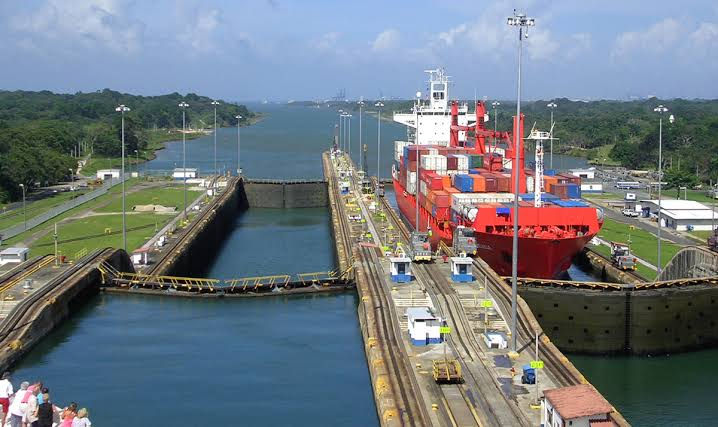
The Suez Canal is a 193 km long and 225 meter broad, manmade water way, that, enables ships to sail between the Asian and the African continents and lies towards the north east of Egypt. It connects Port Suez on the southern tip of the Suez Canal in the Red Sea with, Port Said in the Mediterranean Sea in the north. [1]. About 12% of the global trade and about 30% of the world’s container traffic passes through it. This saves the ships from circumnavigating the Cape of Good Hope, thus, saving about two weeks of additional voyage time and associated costs. [2, 3, 4, 5].
An analysis of the data provided on the website of the Suez Canal Authority (SCA) indicates that, daily about 51 ships crossed the canal in 2019. [6]. While the Wall Street Journal put this figure at 40 - 50 ships per day in an article. [7]. Each ship takes about 12 to 16 hours to cross both the ports on the canal. [8]. So it is evident that, this canal is geopolitically, a very sensitive piece of maritime real estate.

Geopolitical Scenario
The Suez Canal was completed in the year 1869. Since then, it has seen the French, British and over time, many other ambitious nations trying to gain control over it. Today, its control, operations and administration rests with the SCA of Egypt. The banks of this canal are flanked by the Egyptian nation. Of late, the Somalian pirates have started flexing their muscles to extract money from ships as they approach the Red Sea while awaiting their turn for accessing the canal.
This canal is very important for all maritime organizations and navies of different nations. Any traffic disruption in this Canal, has cascading effects throughout the world. Consequently, it is always on the radar of all its stakeholders.
The significance of its operational continuity can be gauged from the fact, that, when Merchant Vessel (MV) Ever Given got stuck in the Suez Canal; even the International Maritime Organization (IMO) General Secretary, Mr Kitack Lim, stated on 26 March 2021, “I offer my encouragement to the Egyptian authorities, as well as the salvors, tug and dredger operators and all other parties, who are working tirelessly to safely refloat the ship and resume transit…” He further stated that, “I ask for patience from stakeholders across the supply chain…to ensure that the ship, its crew, its cargo and the environment remains protected”. [9]. This was said, to assuage the ruffled feathers of the trading community and to help maintain tranquility in the face of losses, during this black swan incident.
Once, MV Ever Given was re-floated, the IMO Secretary-General Mr Kitack Lim on 01 April 2021 stated, “I am extremely pleased that the MV Ever Given has been successfully refloated and that vessels are now able to resume their journeys through the Suez Canal…” [9]. This clearly shows the amount of international geopolitical scrutiny that, goes into ensuring that the Suez Canal remains functional.
Choke Relevance
The Suez Canal offers the shortest sea route between the Mediterranean Sea in Europe and the Arabian Sea in the Afro-Asia combination. If this route is blocked, then; all ships need to sail through the turbulent waters of the Cape of Good Hope. [4, 5, 7]. This option is very costly, time consuming and has tremendous economic disruption impact.
Economic Relevance
The Suez Canal earns a minimum of Rs.106 crores per day for the Egyptian Government exclusively from maritime transit fees, as quoted by the SCA Chief, Admiral Osama Rabie. On an annual basis, it is roughly equivalent to about 2% of Egypt’s GDP. [8]. Consequently, the disruption of the Suez Canal traffic due to the wedging of the ship MV Ever Given; cut off this revenue stream for the Egyptian Government. Apart from this, most maritime operators that rode this supply chain, too suffered multi spectral incidental losses. At that time, the only alternatively available to reach the Mediterranean Sea, was, to sail around the Cape of Good Hope. This imposed time, operating costs and insurance premium penalties, apart from causing logistics delays and losses of perishable goods. [7].

The huge revenue losses suffered by the SCA, due to the pandemic and MV Ever Given accident and from other reasons, induced the SCA to enhance its transit tariff by 6% from February 2022 on all vessels less, Liquefied Natural Gas (LNG) carriers and luxury liners. [9]. Since the Suez Canal Authority decided to exempt the LNG carriers from this enhanced tariff; they had nipped the possibility of inflation due to the rising cost of LNG in the bud. Possibly, they may have realized that, LNG is the basic factor of production for all manufacturing processes for energy generation.
Furthermore, part of the energy produced by LNG burning, would also be used to operate the services sector. Hence, the cost of production of goods and services, due to a plausible rise in energy prices, as a result of the tariff enhancement was prevented by, the exemption of LNG from the new but higher tariff structure.
However, when finished goods are exported or imported by any country through the Suez Canal by using bulk carriers or container ships, then; this increased tariff will be passed on to the ultimate consumers, in the form of increased logistics and insurance costs.
A broad look at the different categories of ships, that use the Suez Canal as per the SCA data on an annual basis include, cargo ships 7.61%, container vessels 26.76%, bulk carriers 27.1, tankers 27.41% and other varieties of vessels including warships, cruise ships etc that cumulatively total to about 7.61%. LNG carriers constitute about 3.71% of the total vessel traffic.[10]. So, it can be seen, how, all these ships will enhance the revenues of the SCA. Moreover, the UN and World Trade Organization have already predicted that trade will pick up, to make up for the lost time due to COVID-19 lockdowns. Consequently, these facets, will enhance Egypt’s GDP. True, the Suez Canal is a money spinner but, it also poses certain challenges which cannot be ignored.

Challenges
The Suez Canal is a major facilitator of trade. It is susceptible to certain challenges which include overcoming Black Swan like massive disruptions that are plausible but have a low probability of occurrence.
The recently witnessed COVID 19 lockdown, shipping accidents, high seas piracy etc can severely choke, the limited throughput of the canal. These catastrophes will shatter the global economic stability, logistics, supply chain and trade predictions.
UNCTAD, in its Policy Brief Number 84 dated 21 April 2021, has accepted that Container Supply Freight Rates have increased during and post lockdown, due to a shift in consumers’ demand preferences. Consequently, the containers lay idle along the earlier predicted logistic lines. However, during the lock down, the trade patterns changed. [11].
The report further stated that, “surge in electronic commerce… led to increased demand for manufactured consumer goods…(that was) moved in shipping containers”. The report further highlights that, the lockdown relaxations and other anticipations, led to additional stocking of consumer goods. The problems got compounded by the fact that; containers lay in unprofitable locations, from where, the shipping lines, loathed to load them on their ships and move them around, at unfavorable costs. Therefore, it can be seen, how, global trade observers like UNCTAD, too, monitor the maritime trade to prevent disruptions. [12].

Opportunities for India and the World
With the enhancement of tariff rates, the Indian exports and imports too will become dearer. Various Indian chambers of commerce, now need to interact with the SCA to get favorable concessions to offset the same. This is also possible through the introduction of Strategic International Relationship (IR) ties at Government to Government level.
Simultaneously, the Indian software and skilled or technical manpower providing companies, too have to endeavor and offer greater value through contracts with the SCA, to leverage IR gains, by the enhancement of the economic dealings between the two.
The above referred economic traction, can be in the field of customized software development for providing greater Artificial Intelligence (AI) and data analytics based services, to, increase the throughput of the canal. This will reduce the operating costs for the SCA.
The Indian insurance companies, can provide spot insurance options against sudden disruptions of the Suez Canal and offer counter piracy assistance in the Arabian Sea. This will enhance India’s GDP and also Indian stakes in the canal.
Once the Indian establishments show their credible contribution to the Egyptian exchequer, through better management of the Suez Canal, in terms of enhanced revenues, resulting from increased throughput; the Indians will be in a position to seek better tariff terms, including the acceptance of payment in Rupees for Indian ships that sail through the Suez Canal. The latter will eliminate, the unnecessary currency conversion taxes and tariffs being paid by the Indians on it so far.
Indian insurance and actuarial firms can in fact, offer customized Political Risk Insurance policies to counter maritime piracy and black swan type incidents etc. More details about the same can be found in the article titled, ‘A Special Mitkat Report : Political Risk Insurance by Miss Isha Jaiswal’ in the Economic Times Edge Insights publication dated 01 July 2021. [13].

Conclusion
The Suez Canal is a very busy and important artery that enables maritime movement of goods between the Asian and European nations. Even the goods destined to or exported from the Americas, use this route to reach their Asian and Middle East markets. The SCA has very well administered this geostrategic and geopolitical asset, while, earning a handsome revenue from it. Any disruption of this choke point, can quickly convert it into; the crosshairs of a global flash point.
As the computing power is increasing globally, India and other nations can use their innovative data churning and analytical prowess to, increase the throughput of ships and design better maritime ancillary services, that will curate novel and additional revenue generating streams for all the stakeholders. The Suez Canal is narrow but its money generating options are as vast as the limitless oceans on our earth.
About the Authors
Isha Jaiswal has published many articles on Political Science, International Relations (IR), Military History and Art. She passionately studies the concept, designing and implementation solutions of Polity, Governance and IR.
Harpreet Singh Jaiswal has published articles on Forensic Science and Environment. He has done an MBA in Finance and Marketing and has an inclination to forensic fraud investigation using statistics.
References
7. https://www.wsj.com/articles/after-the-suez-canal-jam-hundreds-of-ships-await-their-turn-11617118903
11. Container shipping in times of COVID-19: Why freight rates have surged and implicaitons for policy makers (unctad.org)
Additional Readings
DISCLAIMER: The contents of this blog are for information purposes only. It is not an official or professional advice on the subject matter. The blog post contains opinions of the authors, and these don’t reflect the views and the opinions of The Sikh Chamber of Commerce. While the authors have shared that they have made due effort to ensure content is accurate for which reason they have also shared reference articles, yet there may be some mistakes, errors and omissions. The authors do not claim to be experts, thus, all of the information included on the post shouldn’t be regarded as professional advice. You are advised to do your own due diligence on the information and opinions shared, however if you wish to rely on any information on the blog, you do so at your own risk.
TSCC


Comments